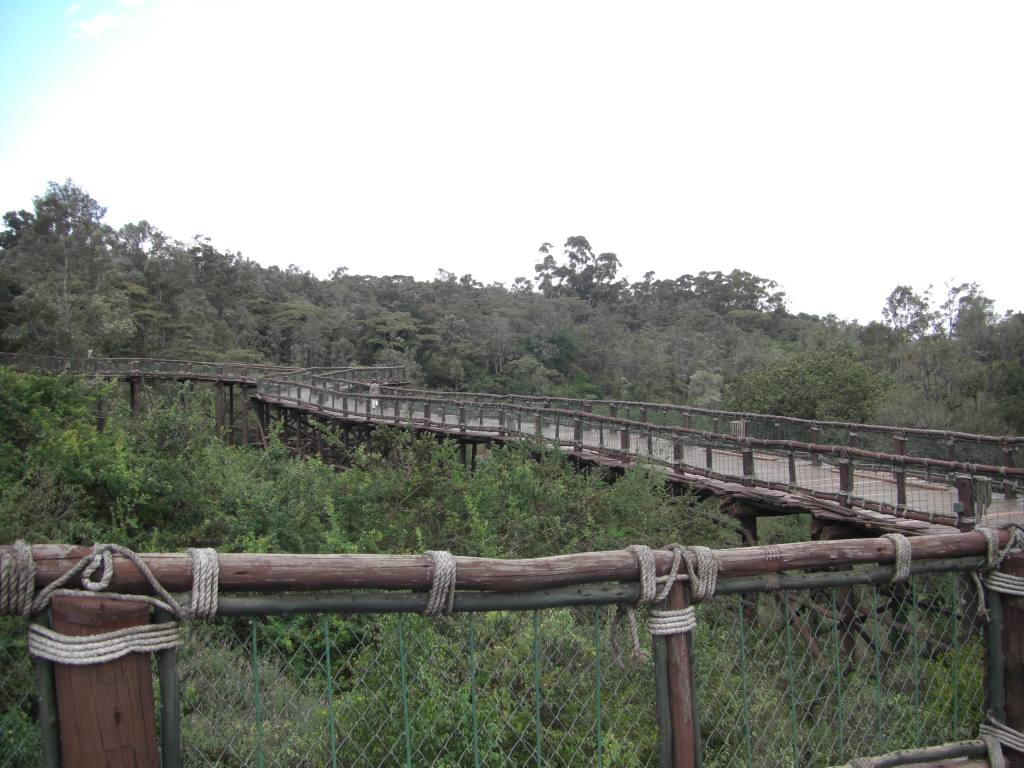
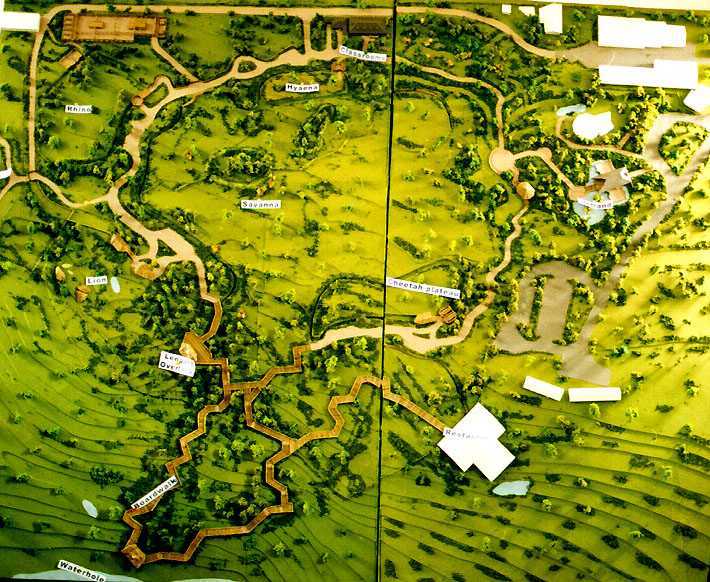
Nairobi Safari Walk (NSW) is Kenya Wildlife Service’s interpretive, boardwalk-based wildlife experience that brings Kenya’s major ecosystems—savanna, wetland, and forest—into one walkable circuit just outside the gates of Nairobi National Park. Designed for close-range learning without the pressures of vehicle safaris, NSW is both an introduction to Kenya’s biodiversity and a practical classroom for conservation.
This guide is written for all visitor types—first-timers, families, schools, photographers, researchers, and time-limited travelers—and is structured to help you plan well, move responsibly, and learn deeply.
Quick Orientation: What Makes Nairobi Safari Walk Different?
At a glance
| Attribute | What it means for your visit |
|---|---|
| Boardwalk circuit | You explore on foot, following a clearly routed trail through themed habitats |
| Habitat zones | Savanna, wetland, and forest settings with representative species |
| Close-range viewing | Elevated walkways and viewing points offer safe, ethical proximity |
| Education focus | Interpretation panels, guided learning, and school programs are central |
| Conservation mandate | Operated by KWS with an explicit conservation education mission |
Expert summary: NSW is not a zoo and not a game drive. It is an interpretive conservation walk—best for learning, photography at humane distances, and building ecological understanding before (or instead of) a park safari.
Where NSW Fits in Your Nairobi Itinerary
Location & context
- Sits within the Nairobi National Park complex on the Lang’ata side of the city
- Easy to combine with:
- Nairobi National Park (game drive)
- Animal Orphanage
- David Sheldrick Wildlife Trust
- Giraffe Centre
- Karen Blixen Museum
Expert tip: If you’re short on time or traveling with children or students, start with NSW for context, then do a shorter park drive or a focused conservation visit (e.g., Sheldrick).
What You’ll See: Habitats, Species & Interpretation
The Three Core Habitat Zones
| Zone | What it teaches | Typical highlights |
|---|---|---|
| Savanna | Grazers, browsers, predators, and open-country ecology | Antelope species, plains birds, interpretive predator–prey panels |
| Wetland | Water dependence, birdlife, and riparian systems | Waterbirds, amphibians, aquatic plants |
| Forest | Cover, edge habitats, and biodiversity density | Primates, forest birds, dense vegetation displays |
Expert summary: The habitat framing matters more than any single animal. NSW is built to teach relationships—who eats what, who needs water, who needs cover, and why habitat loss breaks these links.
Education & Learning: Why NSW Exists
Core learning goals
- Explain ecosystems, not just species
- Show threats (habitat loss, conflict, illegal trade) in a concrete way
- Build conservation literacy for schools, families, and first-time visitors
- Provide a field-classroom for students and educators
Formats you’ll encounter
- Interpretation panels and signage
- Guided walks and ranger/educator talks (when scheduled)
- School programs and structured learning visits
- Self-guided learning with clear wayfinding
Expert summary: NSW is strongest when treated as a learning experience first and a sightseeing stop second.
Visitor Types: How to Get the Most Value
First-time visitors
- Use NSW to learn the basics of Kenya’s wildlife and ecosystems
- Read the panels; don’t rush the loop
- Combine with a short Nairobi National Park drive
Families with children
- Short walking distances, safe viewing points
- Bring water, hats, and simple snacks for designated rest areas
- Use “one animal at a time” focus to avoid overstimulation
School groups
- Pre-set learning objectives (habitats, food webs, conservation threats)
- Use worksheets or guided programs if available
- Enforce the quiet, slow-movement rule to protect animals and learning quality
Photographers
- Prioritize behavior over portraits
- Use mid-range lenses; avoid crowding rails
- Best light: mornings and late afternoons
Researchers & educators
- Focus on interpretation quality, visitor flow, and habitat messaging
- Observe how the site communicates conservation trade-offs to the public
Planning Your Visit: Timing, Duration & Flow
Best times of day
| Time | Why it works |
|---|---|
| Morning | Cooler temperatures, calmer animals, better light |
| Late afternoon | Softer light, fewer crowds on some days |
How long to plan
- Typical visit: 1.5–2.5 hours at an unhurried pace
- Add time for café/rest areas or nearby attractions
Crowd strategy
- Arrive early on weekends/holidays
- Move clockwise with the main flow; rotate at viewpoints
Expert summary: NSW rewards slow, deliberate walking. Rushing reduces both learning and animal welfare.
Check out our comprehensive guide on Best Time & Planning Guide for Nairobi Safari Walk
Getting There & Getting Around
Transport options
- Taxi / ride-hailing: simplest for most visitors
- Private vehicle: parking available in the park complex
- Tour pickups: common in city tours and combo itineraries
On site
- Follow posted routes and signage
- Use designated rest areas
- Ask staff for accessibility routing if needed
Facilities & Practicalities
| Facility | What to expect |
|---|---|
| Restrooms | Near entrance/visitor areas |
| Café / refreshments | Simple meals, drinks, snacks near the complex |
| Seating & shade | At rest points, not along viewing rails |
| Gift shop | Souvenirs and educational items (where available) |
| Accessibility | Boardwalk design supports many mobility needs; check on arrival |
Food & water policy (conservation-first)
- Carry water
- Eat only in designated areas
- Keep food sealed during the walk
- Pack out all waste
Safety, Rules & Responsible Visiting (Why This Matters)
Core principles
- No feeding, no touching, no harassment
- Low noise, slow movement, short viewing times
- Stay on paths and behind barriers
- Follow staff instructions at all times
Why science supports these rules
- Visitor behavior affects animal stress and behavior (“visitor effect” research)
- Predictable, quiet, low-pressure environments protect welfare and learning
- Responsible conduct improves both animal outcomes and visitor experience
Expert summary: At NSW, your behavior is part of the conservation system.
Photography & Media: Ethical Wildlife Imaging
- Use natural light; avoid flash unless clearly permitted
- Don’t lean over barriers or block others
- If the animal changes behavior because of you, step back
- Drones and special filming require formal authorization
Conservation & Sustainability: How NSW Contributes
Key pillars
- Conservation education for the public and schools
- Habitat representation and restoration within the site
- Species protection and welfare under KWS standards
- Community and student engagement
- Research and training linkages
- Waste, water, and energy management on site
How visitors can help
- Follow rules (this is the biggest impact)
- Minimize waste and plastics
- Support official conservation programs
- Choose efficient itineraries to reduce travel footprint
Nearby Attractions & Smart Combos
| Combo | Why it works |
|---|---|
| NSW + Nairobi National Park | Learn first, then see ecosystems in the wild |
| NSW + Animal Orphanage | Add rescue and rehabilitation context |
| NSW + Sheldrick Trust | Deep dive into elephant conservation |
| NSW + Giraffe Centre | Family-friendly species focus |
| NSW + Karen Blixen Museum | Culture + conservation in one day |
Sample half-day plan
- Morning: NSW (learning + walk)
- Late morning: Giraffe Centre or Orphanage
- Lunch nearby
Sample full-day plan
- Morning: NSW
- Midday: Nairobi National Park game drive
- Afternoon: Sheldrick or Blixen Museum
How NSW Compares: Safari Walk vs Game Drive
| Aspect | Nairobi Safari Walk | Nairobi National Park |
|---|---|---|
| Viewing style | On foot, controlled | In vehicle, free-ranging |
| Learning | Structured, interpretive | Experiential, ecosystem-scale |
| Proximity | Close but managed | Distant, animal-led |
| Best for | Education, families, schools, first-timers | Wildlife behavior, landscapes, “wild” experience |
Expert takeaway: They are complementary, not competitors.
FAQs (Fast Answers)
- Is NSW good for kids? Yes—safe, short walking distances, strong learning value.
- Is it a zoo? No. It’s an interpretive conservation walk with habitat framing.
- How long does it take? About 1.5–2.5 hours at a relaxed pace.
- Can I combine it with other sites? Yes—very easily within the same area.
- Do I need a guide? Helpful but not required; panels and signage are strong.
Final Word: Be Part of the Conservation Story
Nairobi Safari Walk works best when visitors treat it as a learning space, not just a photo stop. Your choices—moving slowly, keeping quiet, respecting animals, managing waste, and supporting credible conservation programs—directly shape both animal welfare and public understanding of nature.
Join NairobiSafariWalk.org to stay informed, plan smarter visits, and support conservation-first tourism around NSW. This unofficial but reliable visitor resource is dedicated to providing expert, practical, and up-to-date guidance for everyone who wants to experience Nairobi Safari Walk responsibly—and help ensure that education, welfare, and conservation remain at the heart of the park.